

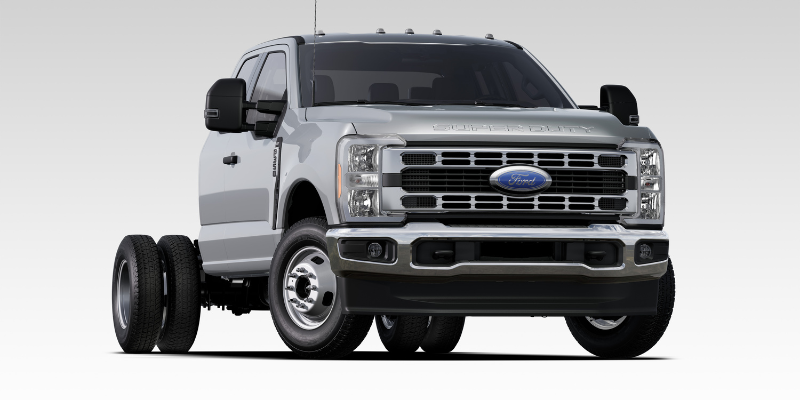
Picking the wrong work truck costs Maryland small business owners more than they think. Not just at the register, but in taxes, downtime, and jobs they can’t take on.
The F-150, F-250, and Transit each sit in a different tax and regulatory tier depending on configuration. The F-250’s available 10,000 lb. GVWR configuration is the sweet spot: full Section 179 eligibility, heavy-duty capability, and no FMCSA commercial vehicle requirements.
The difference between these two categories can mean thousands of dollars in tax savings, or thousands in unnecessary costs if you choose wrong. At Upper Marlboro Ford, we’ve helped contractors, tradespeople, and small business owners across Prince George’s County, Waldorf, Annapolis, and beyond find the right fit for their operation.
Commercial vs. non-commercial vehicle classification for Maryland work trucks comes down to GVWR. Vehicles over 10,000 lbs. GVWR trigger FMCSA rules; vehicles over 6,000 lbs. may qualify for the full Section 179 tax deduction. The Ford F-250 Super Duty’s available 10,000 lb. configuration threads both needles.
Key Points: Commercial vs. Non-Commercial Vehicle
- GVWR determines classification. Work-use vehicles over 6,000lbs GVWR (Gross Vehicle Weight Rating) become eligible for Section 179 deduction. Some lighter vehicles may qualify, with limits.
- The F-250 Super Duty and Ford Transit are built for different jobs. Towing heavy loads and hauling enclosed cargo are not the same need.
- The F-250 maximizes both its weight class and your benefits. While the F-150, F-250, and Transit are all useful for work, the F-250 sits just under the threshold for stricter regulations while being a powerful work truck.
What Makes a Vehicle “Commercial” in the First Place?
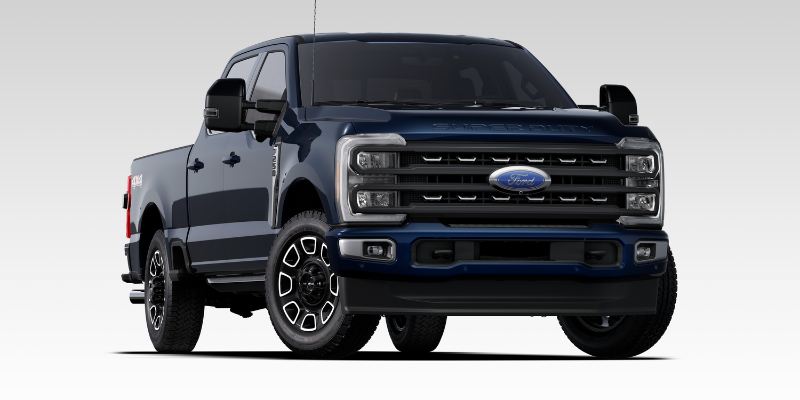
In practical terms, a standard F-150 typically falls below the commercial threshold in most configurations, the F-250 Super Duty tends to be exactly at the threshold, and the Transit can land on either side depending on how it is spec’d.
The word ‘commercial’ gets used loosely, but the federal government is precise about it. The Federal Motor Carrier Safety Administration defines a commercial motor vehicle as one used for business with a GVWR of 10,001 pounds or more. Cross that threshold in your operations, and your vehicle is subject to stricter insurance minimums, DOT compliance reviews, and potential CDL requirements if your total weight crosses 26,000 pounds. Keep in mind: regulatory oversight is triggered strictly by the vehicle’s weight and business usage.
For a plumber in Clinton or a landscaper running jobs between Bowie and Prince Frederick, understanding this line is the first step toward building a fleet that works legally and financially.
How the IRS Sees It: Section 179 Deductions for Work Vehicles
When it comes to Section 179, things are a bit different. IRS tax rules treat heavy vehicles between 6,001 and 14,000 lbs. generously, but they cap standard SUVs at $32,000 for 2026. However, your business can unlock the full, uncapped Section 179 deduction if the vehicle is built strictly for work. That includes cargo vans with no rear seats (like many Transits) and trucks with a bed at least 6 feet in interior length
Heavy work trucks, cargo vans, and vehicles with cargo beds over six feet long may qualify for the full Section 179 deduction without the SUV cap limitation. For 2026, the maximum Section 179 deduction is $2,560,000, with a phase-out beginning above $4,090,000 in total qualifying purchases. Vehicles must be placed in service before December 31 and used for more than 50% of business activity to qualify.
Bonus depreciation of up to 100% may also be available for qualifying property acquired after January 19, 2025, under IRS Notice 2026-11. This can be stacked on top of Section 179 to maximize first-year write-offs.
Always consult a qualified tax advisor before making purchasing decisions based on deduction eligibility, as individual circumstances, business income, and applicable rates vary.
F-250 Super Duty vs. Ford Transit: Picking the Right Tool
Two vehicles dominate the conversation for Maryland contractors, and they serve very different masters. Here’s how they compare side by side.
| Ford F-250 Super Duty | Ford Transit Cargo Van | |
| Best For | Towing, hauling, job site access | Enclosed cargo, deliveries, mobile services |
| Est. Max Towing | Up to 23,000 lbs. (when properly equipped) | Up to 6,900 lbs. (when properly equipped) |
| Est. Max Payload | Up to 4,246 lbs. (est., varies by config.) | Up to 5,110 lbs. (est., varies by config.) |
| GVWR | 10,000–11,400 lbs. | 8,670–11,000 lbs. |
| Cargo Volume | Open bed | Up to 536.4 cu. ft. |
| Full Section 179 | Qualifies (most configs.) | Qualifies (most configs.) |
| Who Needs It? | General contractor, landscaper, equipment hauler | Electrician, HVAC tech, delivery, mobile service |
The F-250 Super Duty is the right call when your work demands raw towing and hauling muscle. The 2025 F-250 is designed to tow up to 23,000 pounds and haul up to 4,246 pounds of payload when properly equipped, with power from four available V8 engine options. One critical point about the F-250 is that it can be configured to land exactly at 10,000 lbs., meaning you get full Section 179 benefits and maximize the truck’s output without triggering FMCSA regulations for a 10,001 lb. commercial vehicle.
The Transit, on the other hand, is purpose-built for businesses that live out of their van. The 2025 Ford Transit Cargo Van offers cargo volume ranging from 280.9 cubic feet to 536.4 cubic feet depending on body style and roof height, making it a rolling workshop for tradespeople running routes across Southern Maryland.
When Does an F-150 Make Sense for a Business?
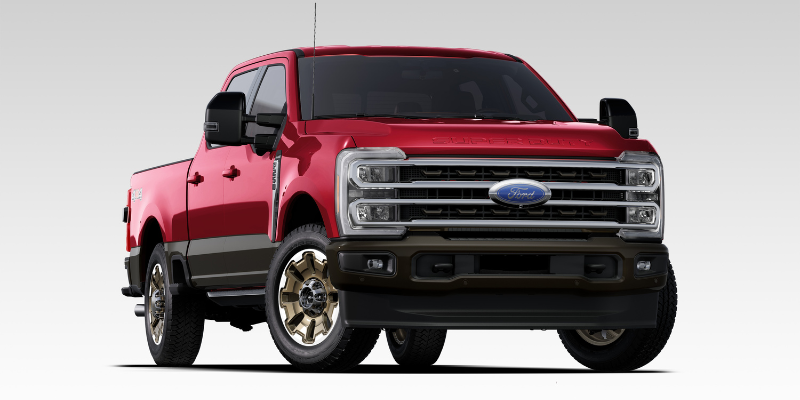
Not every Maryland business owner needs to step up to a Super Duty. The 2025 F-150 can tow up to 13,500 lbs. and carry an estimated maximum payload of 2,440 lbs. when properly configured, making it a capable choice for lighter commercial work. It sits below the FMCSA’s commercial motor vehicle threshold in most configurations, which means no CDL requirements and simpler insurance.
The F-150 can still qualify for a full Section 179 deduction in configurations that feature a GVWR over 6,000 lbs. and a standard bed length of 6.5 or 8 feet. That makes it a tax-efficient choice for sole proprietors, real estate professionals, or light-duty service businesses operating around Bowie, Annapolis, or Upper Marlboro.
Overall, the F-150 is best suited for daily driving with added utility, while the F-250 Super Duty is built for professional contractors who regularly haul massive loads or tow large trailers.
Five Questions to Ask Before You Buy
Before you choose between the F-150, F-250, or Transit, answer these five questions.
- What is my typical load? Towing equipment trailers points to the F-250. Carrying tools and parts points to the Transit.
- Do I need enclosed cargo space? If yes, a pickup bed won’t cut it. The Transit wins here.
- Am I crossing state lines regularly? Interstate commercial operation above the GVWR threshold triggers FMCSA rules, including logbooks and inspections.
- Do I want to maximize my Section 179 deduction before December 31? If yes, confirm your vehicle’s GVWR and business-use percentage before you sign.
- Will I need to upfit this vehicle? Racks, shelving, and service bodies are easier to build into a Transit or a chassis cab from the start than to retrofit later.
A Final Word on Choosing the Right Ford Work Truck
Now that you know the difference between a commercial and non-commercial vehicle, the next step is matching that knowledge to the specific demands of your business before the end of the tax year.
One thing worth emphasizing: the right truck is not always the biggest one. Total cost of ownership matters far more than the sticker price. Fuel costs, insurance premiums, maintenance intervals, and available service when something goes wrong all add up over five years. Ford Pro’s nationwide service network is a real business continuity advantage, not just a selling point. For Maryland contractors who can’t afford a truck sitting in a shop, knowing that a dealer’s service team has your back is worth factoring into the decision.
At Upper Marlboro Ford, our commercial vehicle team works with small business owners from Upper Marlboro, Waldorf, Annapolis, Clinton, Bowie, and Prince Frederick every day. We carry a full lineup of F-150, F-250 Super Duty, and Ford Transit Cargo Van configurations, and we can walk you through upfit options and business financing to get your fleet working for you.
Come see us at 5701 Crain Hwy, Upper Marlboro, MD 20772, or visit us online at uppermarlboroford.com to explore our commercial vehicle inventory and connect with our team.
Connect with us

Recent Blog Entries
- Commercial vs. Non-Commercial Vehicle: Which Ford Work Truck Does Your Maryland Business Actually Need?
- The Best 3 SUVs for Upper Marlboro Drivers
- 2026 Ford F-150 Trim Levels Explained: Which One Fits Your Life in Upper Marlboro?
- 2026 Ford SUV Lineup: A Side-by-Side Size & Cargo Comparison
- 2026 Ford Explorer Trim Levels: A Comprehensive Guide for Upper Marlboro Drivers